
Last updated November 21, 2026
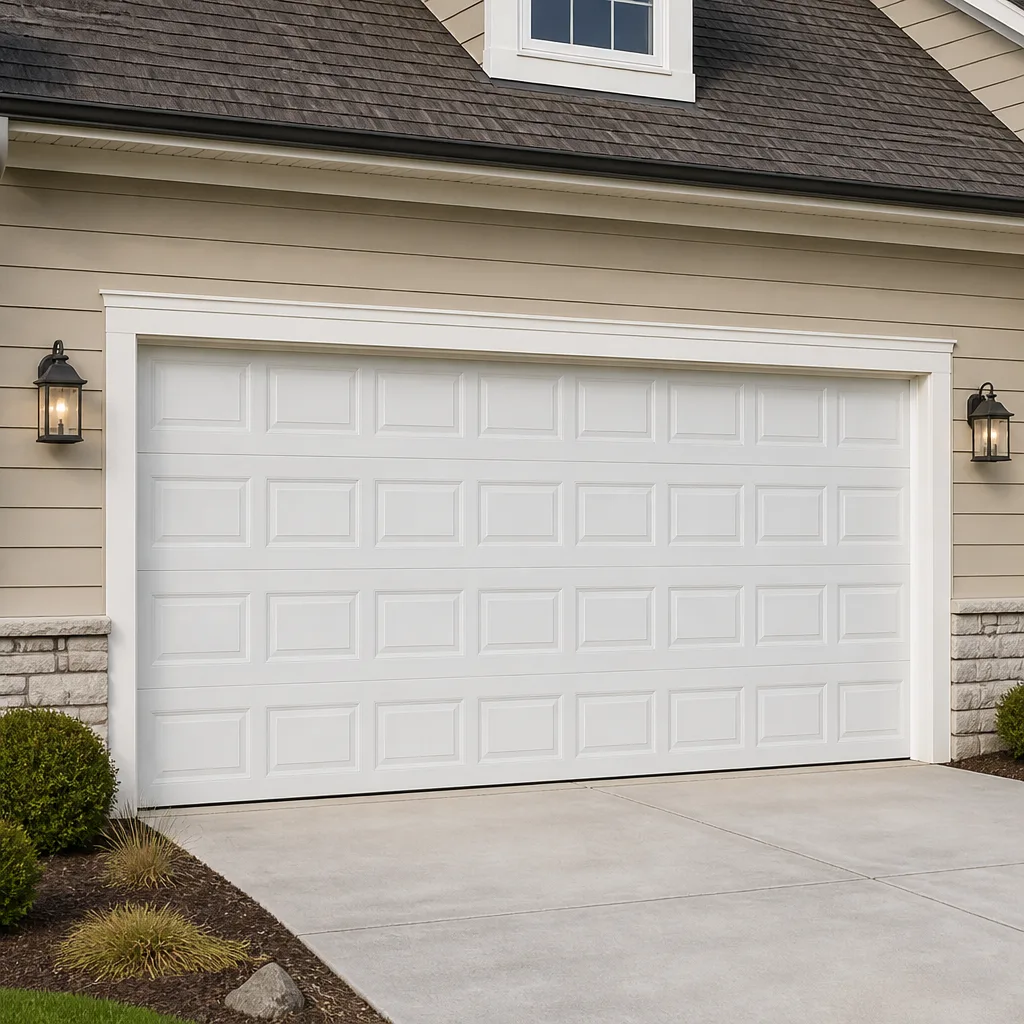 Raised-panel steel
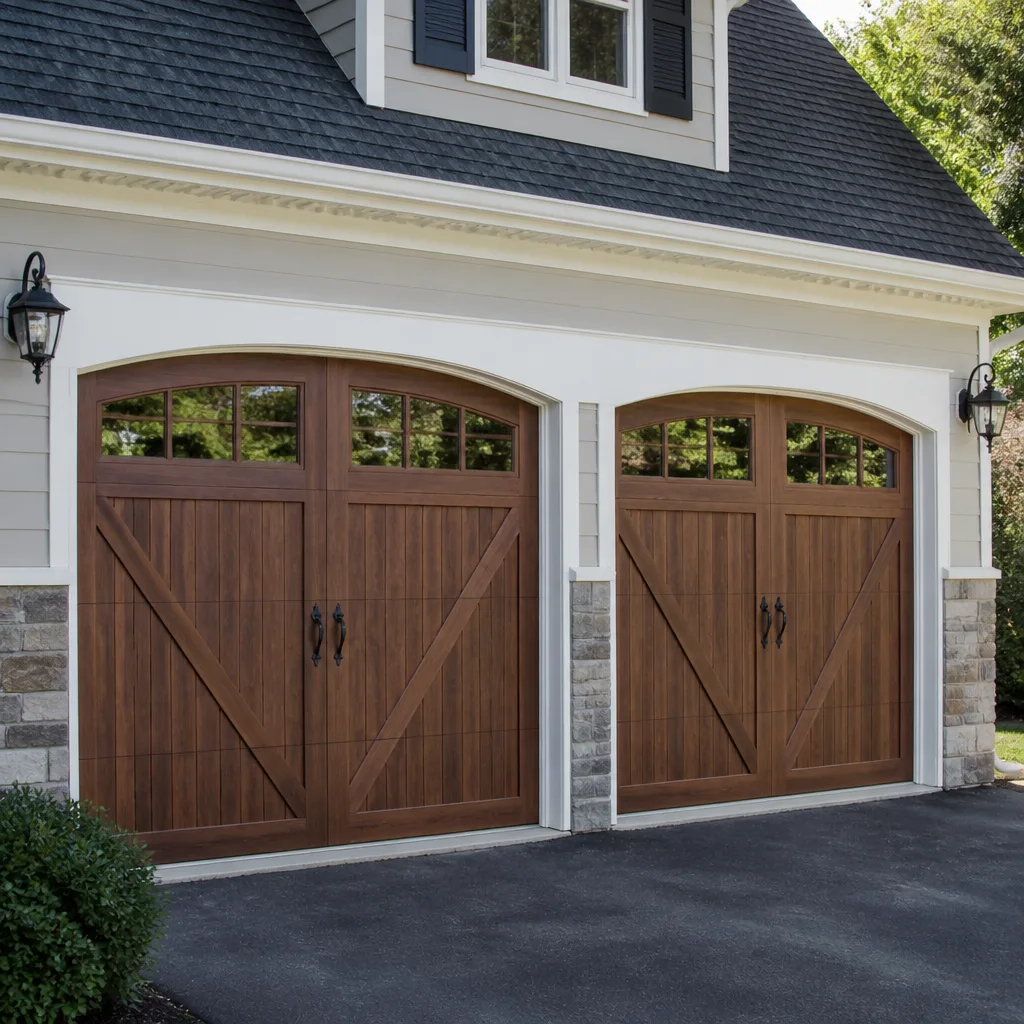 Carriage house
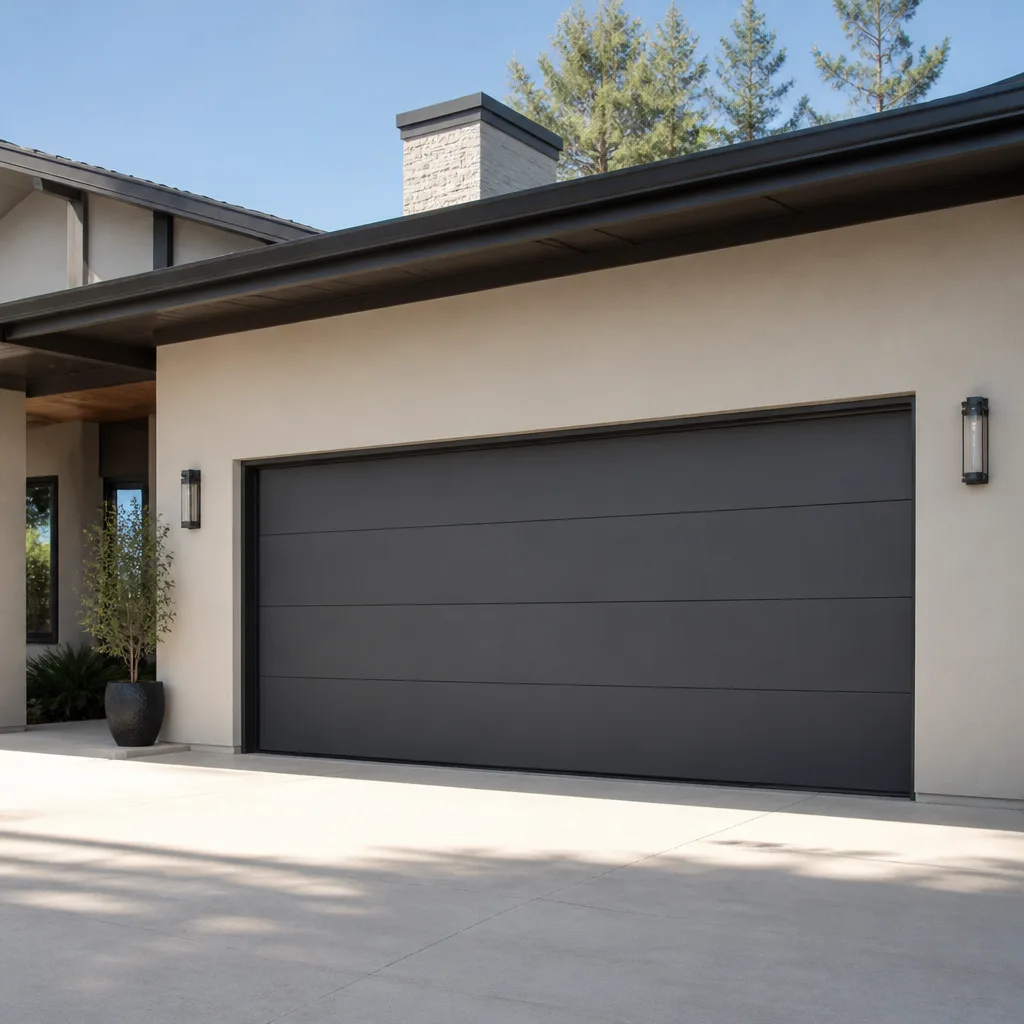 Modern flush
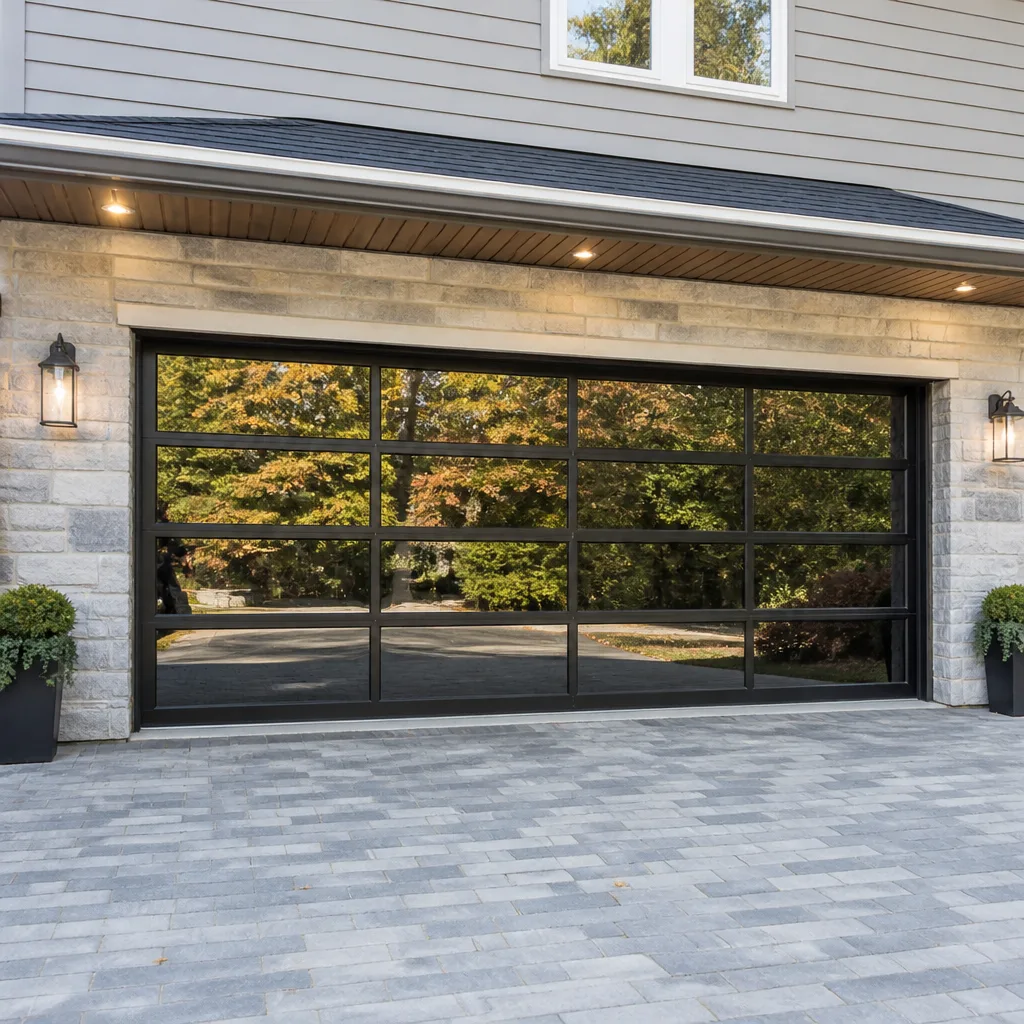 Full-view glass
 LiftMaster openers
 Chamberlain openers
Full 25-point door and opener safety check with every visit - springs, cables, rollers, tracks, and your LiftMaster or Chamberlain opener included
You get a price before we start. It does not change when the pro arrives.
Get your free estimateGarage Door Warning Signs: A Cambridge Homeowner’s Reference Guide
A garage door that’s slow on the way up is not the same problem as a garage door that’s slow on the way down. Most homeowners describe both the same way. Technicians don’t treat them the same way. On the way up, the opener is doing most of the lifting work; on the way down, gravity and the springs are in charge, and the opener is mostly just controlling speed. Those two directions point at completely different components, different failure timelines, and different decisions about whether you finish your coffee or call someone from the driveway. This guide is written for Cambridge homeowners who want to know what a symptom actually means, not just that something sounds off. We’ll walk through how to read each warning sign, rank it by urgency, and know when it’s time to stop watching and start calling.
Quick Answer
The most serious garage door warning signs are a snapped or visibly stretched spring, a frayed or kinked cable, a door that slams down instead of lowering smoothly, and a door that reverses on its own. These require a professional before the door is used again. Slowness, grinding, rattling, and uneven movement are early signals worth watching, but they usually mean component wear that will get worse with every cycle. In short: noise can wait a week, cables cannot.
Styles & brands we work with
- Raised-panel steel
- Carriage house
- Modern flush
- Full-view glass
- LiftMaster openers
- Chamberlain openers
Table of Contents
- Opener Strain vs. Spring Wear: Two Symptoms That Sound Alike
- What Uneven Movement Tells You About Cables and Balance
- Grinding, Squeaking, Rattling: Three Different Mechanical Signals
- The 30-Second Cable Inspection That Changes Your Timeline
- Which Warnings Are Safe to Monitor and Which Need Same-Day Service
- Your Garage Door Is a System, Not a Single Part
- How Cambridge Weather Accelerates Certain Failures
- Why Your Brand Matters for Diagnosis
Opener Strain vs. Spring Wear: Two Symptoms That Sound Alike
Two of the most common complaints we hear in Cambridge sound almost identical on the phone: “the door is struggling.” The mechanics behind that struggle split into two very different problems, and the urgency differs as much as the repair.
Opener strain symptoms show up in the motor and drive system. You’ll notice the door hesitating before it moves, the opener making a straining or humming sound before the door actually lifts, the motor housing getting warm to the touch, or the lights dimming in the house when the door runs. A Craftsman or Chamberlain unit that’s been asked to lift a heavier door than it was rated for, or one with a worn drive gear, will show these signs. Opener strain is progressive. It’s worth diagnosing, but a failing opener rarely causes a sudden drop.
Spring wear symptoms belong to the torsion or extension springs. The door may lift unevenly, rise a foot or two and stop, feel unusually heavy when you disengage the opener, or fail to stay open at the halfway point. Springs are what actually counterbalance the door’s weight, so when they lose tension, the opener has to do work it was never designed to handle. Spring wear is more urgent because a worn spring can break, and a broken spring turns the door into a heavy, dangerous slab under gravity’s full pull.
Here’s the mechanical distinction that matters most: a strained opener is a motor that’s overworked. A worn spring is a system that has lost its balancing force. The second one is worse, faster.
What Uneven Movement Tells You About Cables and Balance
When one side of the door rises faster than the other, the door goes up crooked. Homeowners often notice it as the door “looking slightly off” at the top, or the gap on one side being wider than the other. That single symptom is one of the most mechanically informative things your door can show you, because it points directly at a balance failure between two sides of the system.
Each side of a garage door travels on its own track, and both sides are supposed to be lifted in unison. When they aren’t, one of these is usually happening:
- A stretched or worn spring on one side: On doors with extension springs, one spring may lose tension faster than the other, so one side gets less lift. On torsion systems, an unbalanced torsion assembly can produce the same crooked travel.
- A frayed or kinked cable on one side: Cables ride in drums and along the side of the door. A cable that’s starting to fray will stretch slightly before it fails, causing that side to lag.
- A worn roller or a bent track: Less dramatic, but it produces similar unevenness. A track that’s been knocked slightly out of alignment will pull the door off-course as it travels.
Uneven movement compounds quickly, and this is the part most people underestimate. When the door travels crooked, it puts lateral stress on the tracks, rollers, and hinges. That stress accelerates wear on those components, which accelerates the unevenness, which accelerates the wear. What starts as a slow rise on one side can become a door that catches, jams, or drops on a corner within a matter of weeks.
A crooked-moving door is not something to wait on. It’s a balance problem, and balance problems are the ones that put stress on the entire system. We treat uneven travel as a same-day call in Cambridge, because the longer the door runs crooked, the more parts get dragged into the repair.
Grinding, Squeaking, Rattling: Three Different Mechanical Signals
Homeowners describe all three sounds as “it’s making noise.” But grinding, squeaking, and rattling come from three completely separate mechanical sources, and each one tells you something different about how much time you have.
Grinding
Grinding usually means metal is moving against metal where it shouldn’t. The most common culprits are dry or corroded rollers, a worn drive gear inside the opener, or a torsion bar or bearing plate that’s lost lubrication. Grinding is a wear signal. It’s pulling the useful life out of a component every time the door cycles, but a grinding door isn’t usually a tomorrow-you’re-locked-out emergency. It’s a this-week or this-month problem, and left alone, it tends to take other parts with it. On a LiftMaster or Raynor opener, grinding frequently traces back to the gear assembly.
Squeaking
Squeaking is usually the mildest of the three. It typically comes from metal-on-metal contact that’s still within normal tolerance, just a roller, hinge, or torsion bearing that has lost its lubrication. Squeaking on its own is a maintenance symptom. It’s not urgent, but it is a signal that the door’s moving parts aren’t getting the lubrication they need, and unlubricated parts wear faster.
Rattling
Rattling is the one to watch carefully, because it can come from a few very different sources. Loose bolts and hinges rattle routinely and are simple to tighten. But a rattling sound can also come from a loose cable, a drum, or the spring assembly itself shifting under tension. Rattling that only happens at the very start or very end of travel, or that’s lopsided to one side, deserves a closer look rather than a wrench and a shrug.
The takeaway: squeaking is a maintenance reminder. Grinding is a wear countdown. Rattling could be either, depending on where it’s coming from.
The 30-Second Cable Inspection That Changes Your Timeline
Cables are one of the most important components on your door and one of the least visible, because they’re thin steel lines that run along the sides of the door and wrap around drums at the top. A cable that’s beginning to fail will show you visual signs before it snaps, and checking for them takes about 30 seconds. It’s the single fastest way to tell the difference between “I have weeks” and “I have hours.”
Stand clear of the door, keep it closed, and look up. Never reach into or touch the cables, springs, or drums. Visual inspection only.
What to look for:
- Fraying: Look for a fuzzy, “hairy” texture along the length of the cable. That’s individual strands of the braided steel breaking and standing out. Any visible fraying means the cable is compromised, and the timeline shrinks fast.
- Kinks or bends: A cable is supposed to be smooth and straight under tension. A distinct kink or a spot where the cable sharply bends is a weak point that will fail under load.
- Rust and corrosion: Look for orange-brown discoloration along the cable or around the drums. Corrosion thins the cable and accelerates failure.
- Off-the-drum tracking: The cable should be wrapped neatly around the drum, not loose, unwound, or sitting off its groove. A cable that’s jumped the drum is a serious signal, and the door should not be operated.
- Slack: With the door closed, cables should be under a small amount of tension. A visibly sagging cable on one side, while the other is tight, is the same story as uneven movement.
If you see fraying, a kink, or a cable off its drum, stop using the door. In our experience across Cambridge, cables rarely give repeat warnings; they either show you a fray and then fail, or they fail without much warning at all. That’s why a same-day call is the right call.
Which Warnings Are Safe to Monitor and Which Need Same-Day Service
Not every symptom is a “stop using the door” situation. The useful skill isn’t spotting every sound. It’s knowing which sounds give you time and which don’t. Here’s how we sort them.
Safe to Monitor
- Occasional squeaking: Lubrication-related. Keep an eye and a listen, but it’s not a same-day call.
- Slow opener response, with the door still lifting evenly: Opener strain is progressive. Watch it, note whether it’s getting worse, and plan a repair before it becomes a bigger problem. If the opener is a Chamberlain or Genie unit and the slowness is increasing week over week, get it looked at sooner rather than later.
- Minor rattling that stops when bolts are tightened: Loose hardware is the friendliest rattle there is.
- Cosmetic issues, like a small dent in a panel: Structurally safe unless the dent has cracked the panel or bent the track.
Needs Same-Day Service
- A broken or visibly sagging spring: The door is unsupported and could drop. Every cycle on a broken spring puts weight and stress on components that were never meant to carry it.
- Frayed, kinked, or off-drum cables: Cable failure is the fastest path from “normal” to “dangerous.”
- A door that slams down instead of lowering smoothly: This means the spring system isn’t controlling the door’s descent. It’s a safety failure, not a convenience one.
- A door that reverses on its own or won’t stay closed: That’s a security and safety issue, and it usually involves the opener’s safety sensors or the force settings.
- Uneven movement that’s gotten worse: Quick-compounding balance problems strain the whole system.
- Any door that has come off its track: Obvious hazard.
If you’re unsure which side of the line your symptom is on, describe it and our team can help you sort it. Garage door repair is the place to start, and the repair is quoted before any work begins.
Your Garage Door Is a System, Not a Single Part
The single most useful way to read any warning sign is to remember your garage door is a system. The opener, springs, cables, rollers, hinges, tracks, and panels all influence one another, and a symptom in one place is frequently caused by a problem in another.
That’s why a door won’t lift because the opener isn’t powerful enough, or because the spring has lost tension, or because a cable is dragging. Diagnosing only the part that’s making noise can miss the actual failure. A technician who understands the system approach will check the whole mechanism before recommending what to fix.
This is also why we handle garage door opener repair and spring work under the same roof. A door that won’t lift can be an opener problem, a spring problem, or both, and homeowners shouldn’t have to call a second company to sort out which. When we arrive and to your Cambridge home, we diagnose the actual failure and then fix it, whether it’s a drive gear inside a LiftMaster opener or a torsion spring that’s lost its tension.
How Cambridge Weather Accelerates Certain Failures
Garage door components age differently depending on what they’re exposed to. In Cambridge, the door faces the full range of New England seasons: hot and humid summers, cold winters, and widely fluctuating spring and fall temperatures. Each of those puts specific pressure on different parts.
- Freeze-thaw cycles: Rapid temperature swings are hard on springs. The metal expands and contracts with each swing, and repeated thermal cycling accelerates metal fatigue at the stress points. This is part of why spring failures tend to cluster in the seasonal transition months.
- Winter road salt and snow: Both find their way into the tracks and rollers, and both accelerate corrosion. A door’s low track, rollers, and bottom hinges take the most exposure.
- Humidity: Cambridge summers bring humid stretches that promote rust on exposed metal, particularly on ungalvanized cables and older hardware.
- Ice and freezing rain: Frozen tracks and iced-up rollers put extra strain on openers during the cold months, which is when we see a higher share of opener failures.
None of these mean your door is doomed. They mean that in Cambridge, certain wear patterns are more likely to show up at certain times of year, and knowing what to look for when seasons shift keeps small problems from becoming a broken door in January.
Why Your Brand Matters for Diagnosis
Garage door brands are not interchangeable on the inside. An opener built by one manufacturer has different internals, different force settings, different travel limits, and different troubleshooting procedures than another, even when they look identical from the outside. We’re certified to work on eight of the most common brands on the market: LiftMaster, Chamberlain, Genie, Clopay, Amarr, Wayne Dalton, Craftsman, and Raynor.
That matters when you’re interpreting a warning sign, because the same symptom can have a different most likely cause depending on the brand. A grinding noise in a LiftMaster opener might point to the gear and sprocket assembly; the same noise in a Genie unit might point elsewhere. A Clopay or Amarr door’s panel flex pattern tells you something different than a Wayne Dalton’s. When a technician arrives already familiar with the hardware on your door, they skip the learning curve and get to the diagnosis.
The brand-agnostic approach is deliberate. Our technicians diagnose based on what’s actually failing, not on which parts they prefer to sell. If you’re wondering about the state of your spring specifically, garage door spring repair is a dedicated service we handle with the care it requires.
Common Mistakes to Avoid
- Assuming slow means broken. A slow door is usually a wear signal, not a failure, but treating it as “not a problem yet” too long is how a slow lift becomes a snapped spring. Track the pattern for a couple of days, then act.
- Lubricating moving parts without knowing what to lubricate. Lubricating the wrong components, or lubricating torsion springs improperly, can attract grime and cause more harm than good. It’s a small task that benefits from the right guidance.
- Blaming the opener for everything. Weak lift, hesitation, and strain can all come from a worn spring or cable. Replacing the opener without checking the springs is one of the most common misdiagnoses we see.
- Ignoring one-sided unevenness. A door that rises crooked is a balance warning that gets worse every time it moves. Waiting for it to “sort itself out” doesn’t happen.
- Reaching into the spring or cable area. High-tension springs and cables can release stored energy instantly and are genuinely dangerous. Never touch them, and never attempt a spring repair yourself.
- Disconnecting the opener and treating the door as a manual door. A door with a broken spring will be extremely heavy and unsafe to lift manually. Leave it closed and call a professional.
- Postponing the repair across a Cambridge winter. Cold-weather strain makes every existing weakness worse. A door that’s marginal in October is a bigger problem by December.
See the difference
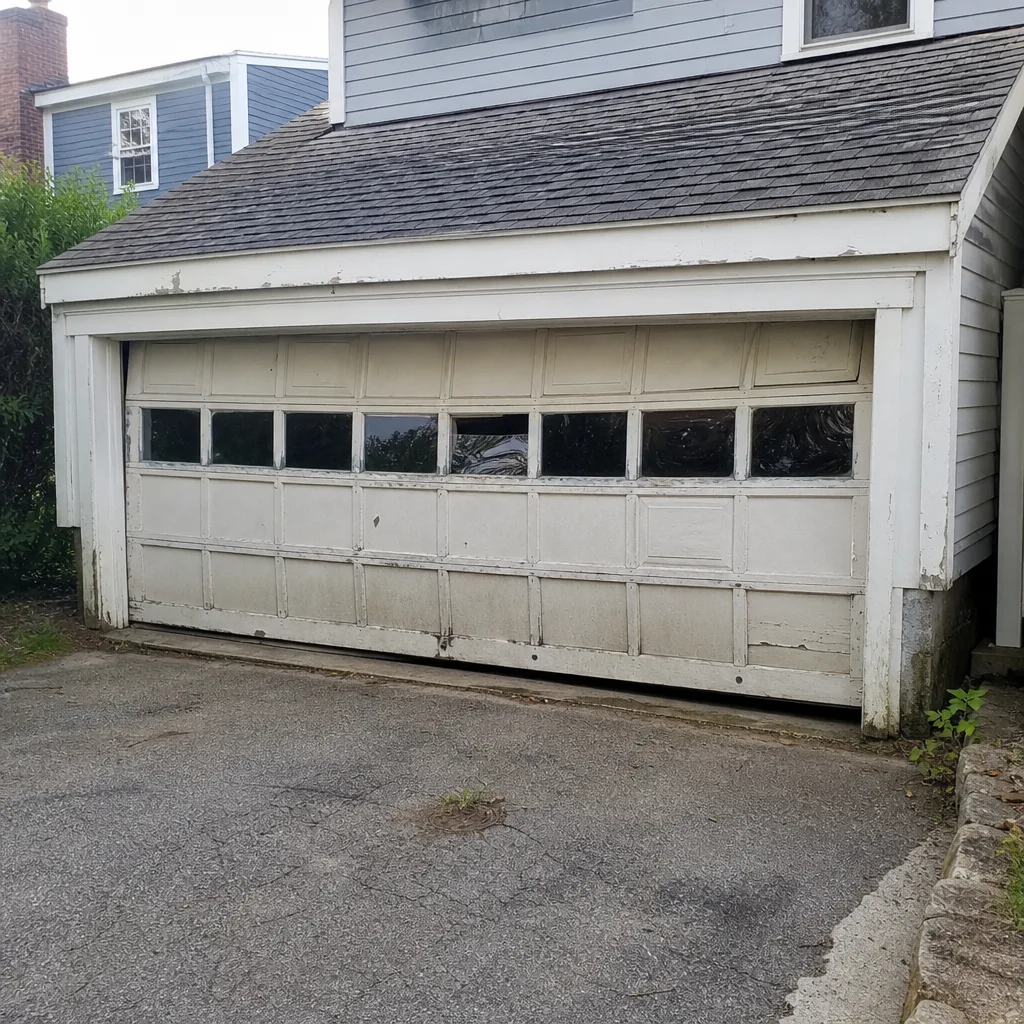 Before
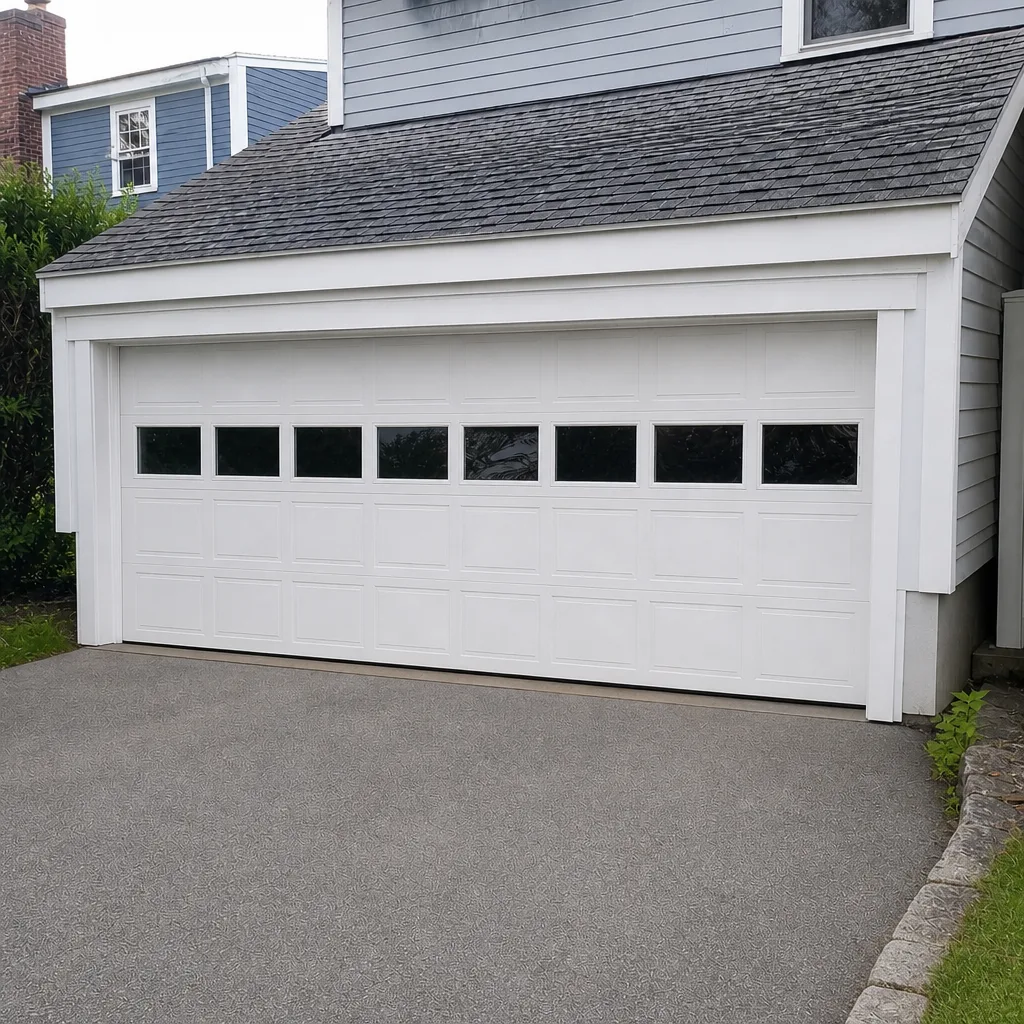 After
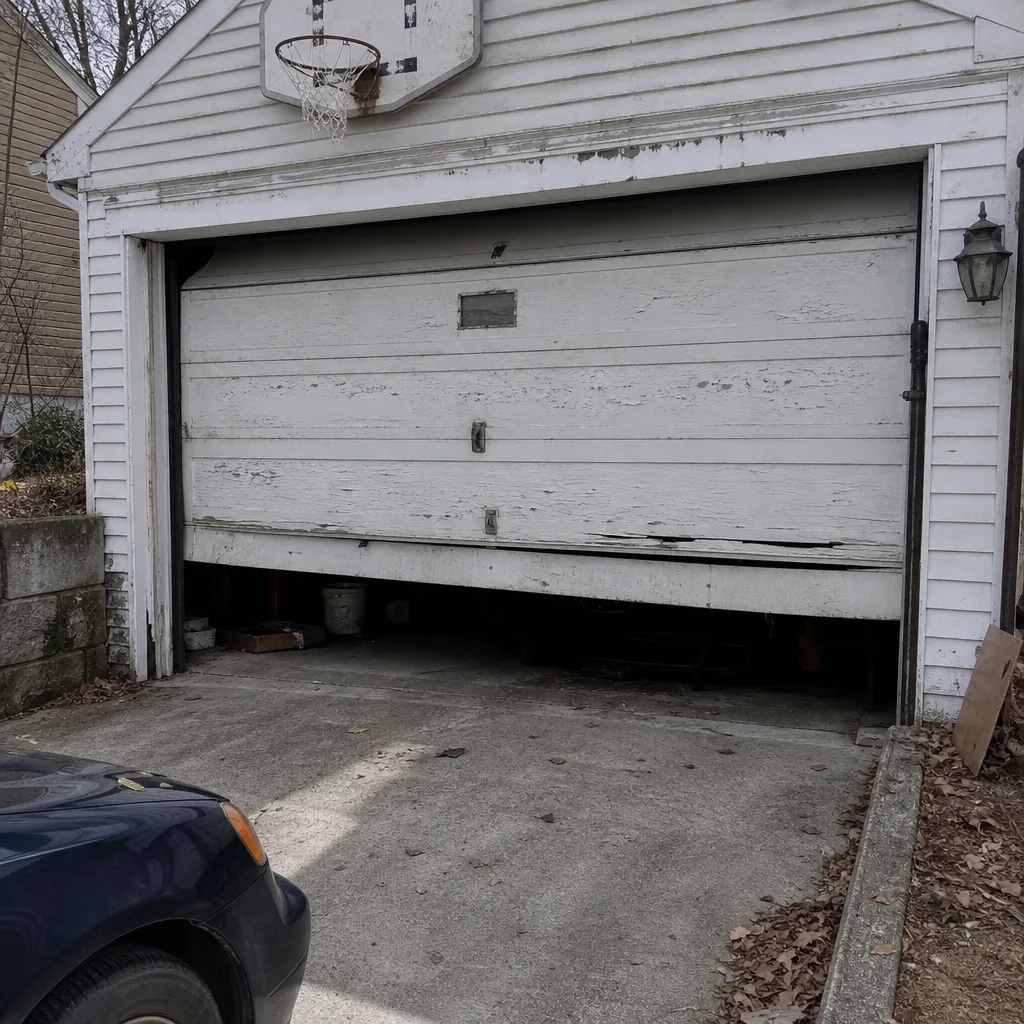 Before
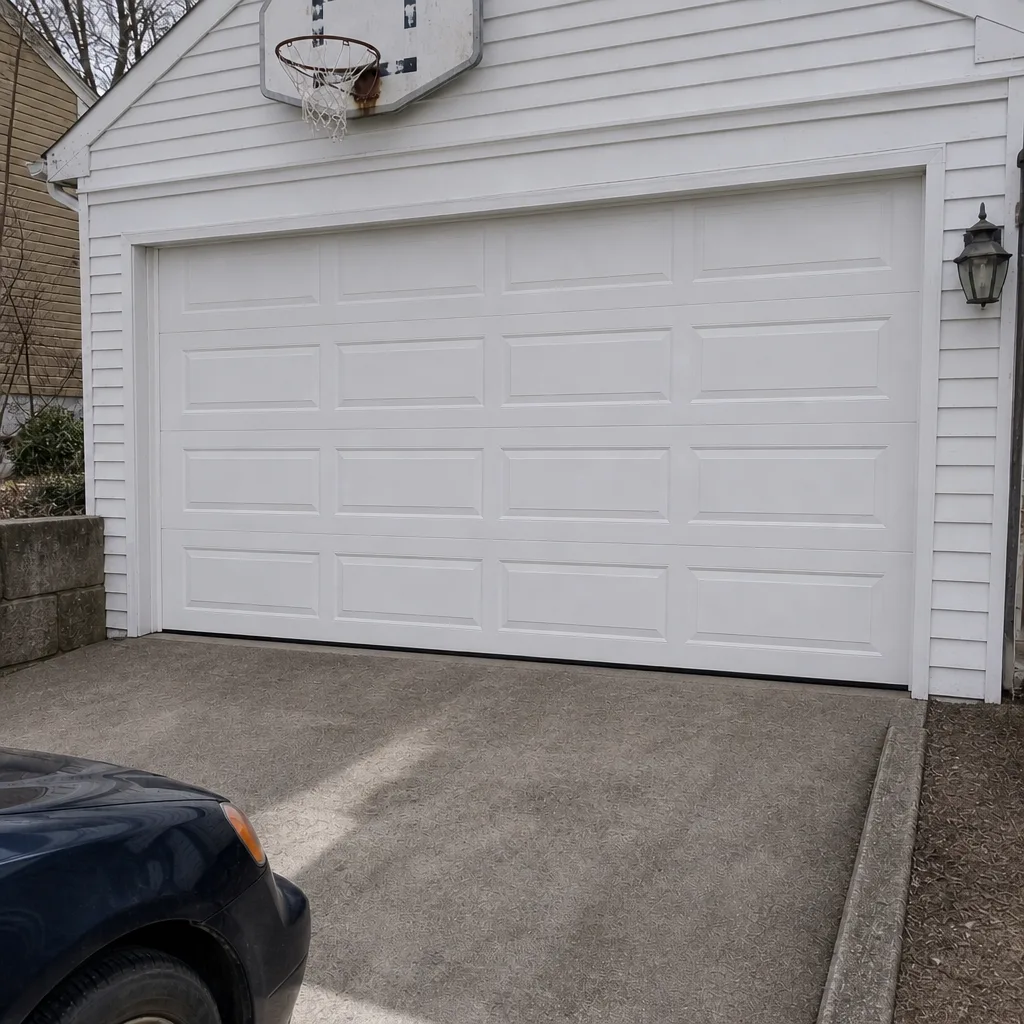 After
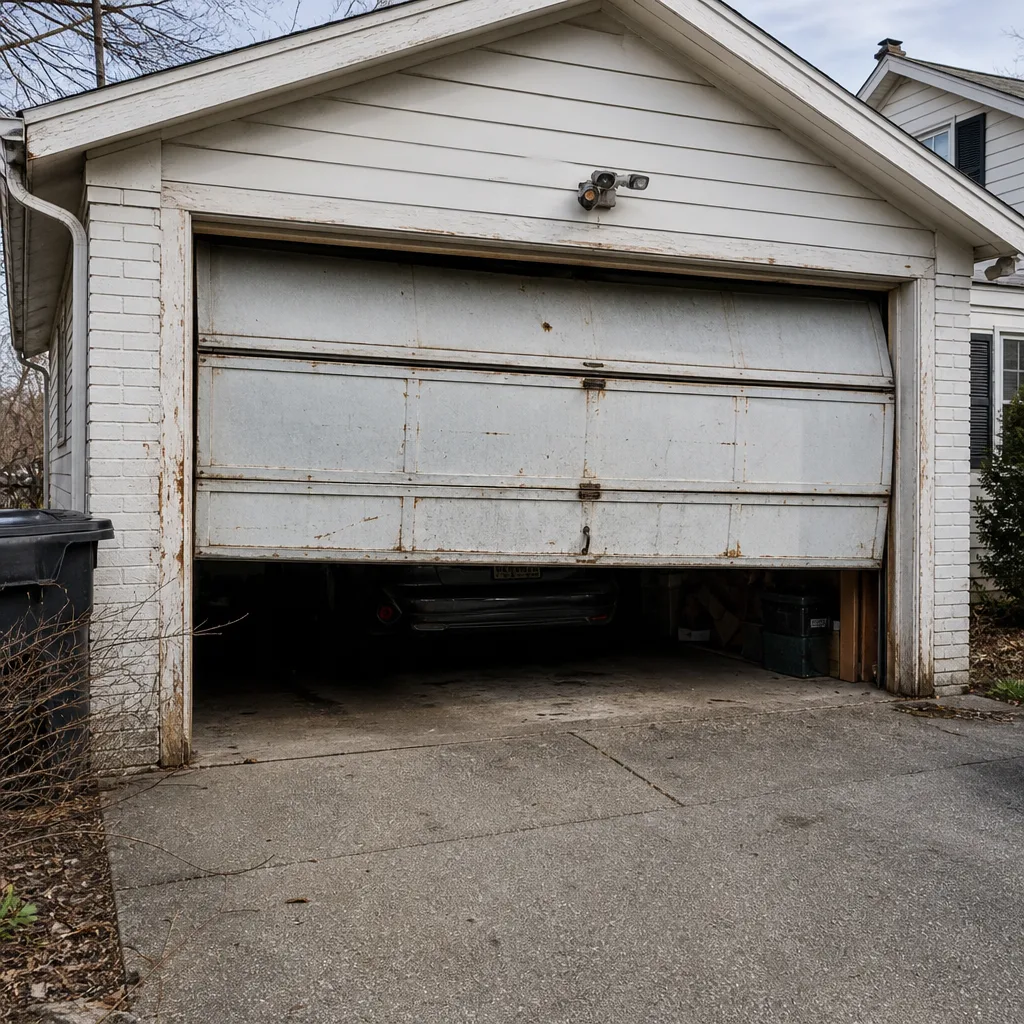 Before
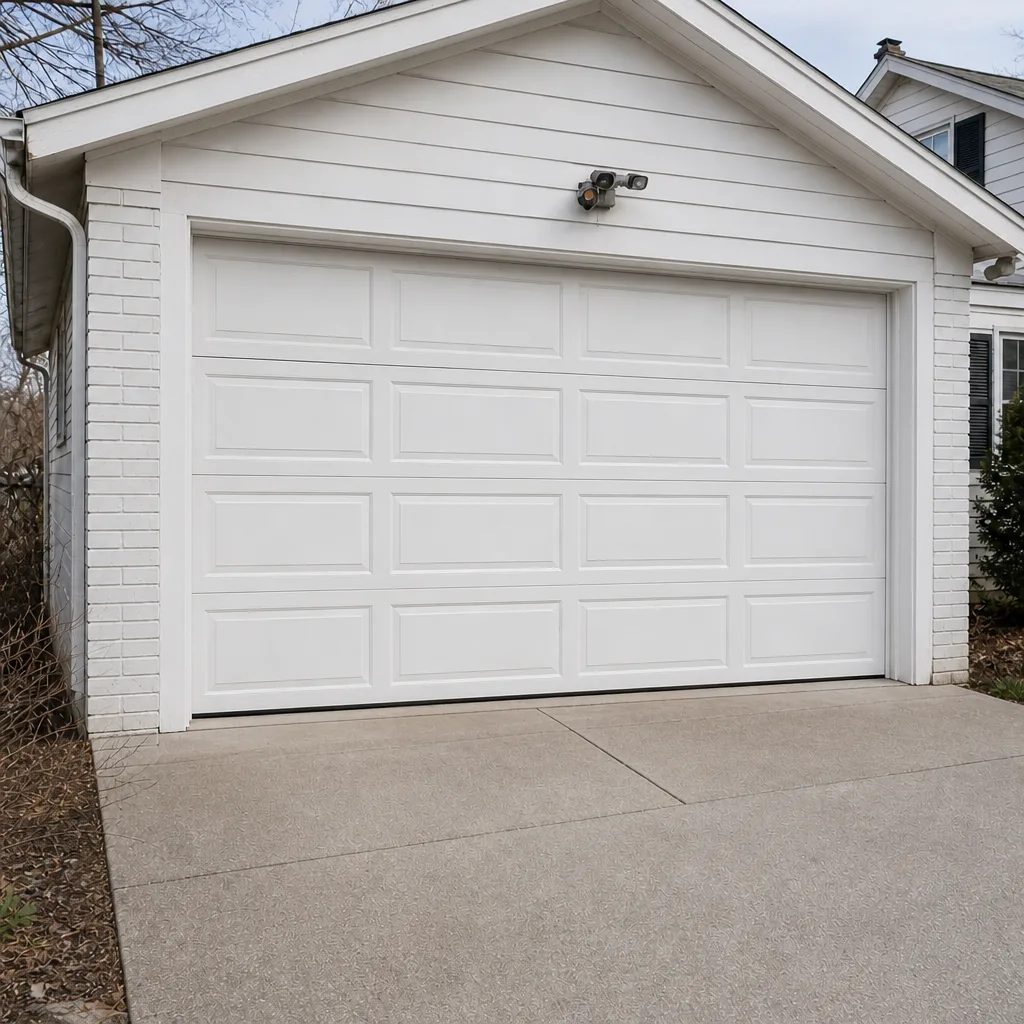 After
When to Call a Professional
Call a professional when the symptom involves a spring, a cable, a door that drops or reverses on its own, or movement that has gotten visibly worse. Those are the signs that put stress on the whole system and can fail without much warning. Also call if you’re unsure; a quick professional assessment is far less costly than a failure, and the written estimate sets the price before any work starts.
Our technicians have up to 13 years of experience and are certified to work on the hardware from LiftMaster, Chamberlain, Genie, Clopay, Amarr, Wayne Dalton, Craftsman, and Raynor. If your door is unsafe or you’re locked out, we also offer emergency garage door service. If you’re in the market for a full replacement rather than a repair, we also handle complete installation from the first measurement to the final test. Cambridge Garage Door Repair Co offers free estimates in Cambridge. Call (855) 870-5964. We answer 24/7. Fast dispatch from 7am to 7pm, Sunday through Friday.
Frequently Asked Questions
The first signs are usually a door that feels unusually heavy, uneven travel from one side, or a door that stops short of fully opening. A worn spring often announces itself with a sharp bang when it breaks, but the visual and physical symptoms above show up before that. If you notice them, keep the door closed and call for a professional inspection. Call (855) 870-5964 for an exact quote; estimates are free.
No. Garage door springs are stored energy, and they can cause serious injury if mishandled. Torsion springs especially are tightly wound and dangerous. Spring repair is a job for a trained technician. Our team handles garage door spring repair as a dedicated service, and we recommend keeping the door closed and untouched until a technician can inspect it.
Look for a fuzzy, frayed texture on the cable, kinks or bends, rust, or a cable that’s come off its drum. Cables run along both sides of the door and wrap around the drums at the top. Any visible damage is a sign the cable is compromised. Call for same-day service if you see it.
Not immediately, but a slow-moving door is a warning. It usually means an opener under strain or a spring that’s losing tension. Left alone, both get worse, and a worn spring can eventually break. Watch for whether the slowness is getting worse, and get it looked at if it is.
No. We set the price in a written estimate before any work starts, based on what we find on site. You’ll know what the repair costs before we begin. There’s no surprise invoice afterward. Call (855) 870-5964 for a free estimate.
Same-day service is often possible for urgent issues like a broken spring, a failed cable, or an opener that’s locked you out. We answer 24/7 and send technicians with fast dispatch from 7am to 7pm, Sunday through Friday. Call (855) 870-5964 and we’ll book the first available opening.
The Bottom Line
Your garage door tells you what’s wrong before it fails, if you know how to read the signs. The key is separating the slow-burn warnings from the stop-what-you’re-doing ones. A humming opener is usually a wear countdown. A crooked-moving door is a balance problem that gets worse fast. A frayed cable is a next-day call. And a broken spring is a broken spring; don’t touch it, and don’t operate the door. The fastest way to make a small problem small is to act on it before it compounds. If you’re seeing any of the signals above, we can help you sort out what’s actually failing and what the fixing it takes. Call us, and we’ll get a trained eye on the door.
At Cambridge Garage Door Repair Co, we’re the multi-brand specialists who handle everything from a snapped spring to a full new installation. Our technicians are certified to work on LiftMaster, Chamberlain, Genie, Clopay, Amarr, Wayne Dalton, Craftsman, and Raynor equipment, so we arrive familiar with the hardware already on your Cambridge home. Whether it’s an opener electronics problem, a spring repair, a panel replacement, or a complete new door, we handle it all, one company across the entire system. For free estimates, you can reach Cambridge Garage Door Repair Co at (855) 870-5964. We answer 24/7. Fast dispatch from 7am to 7pm, Sunday through Friday.
Written by the team at Cambridge Garage Door Repair Co.