
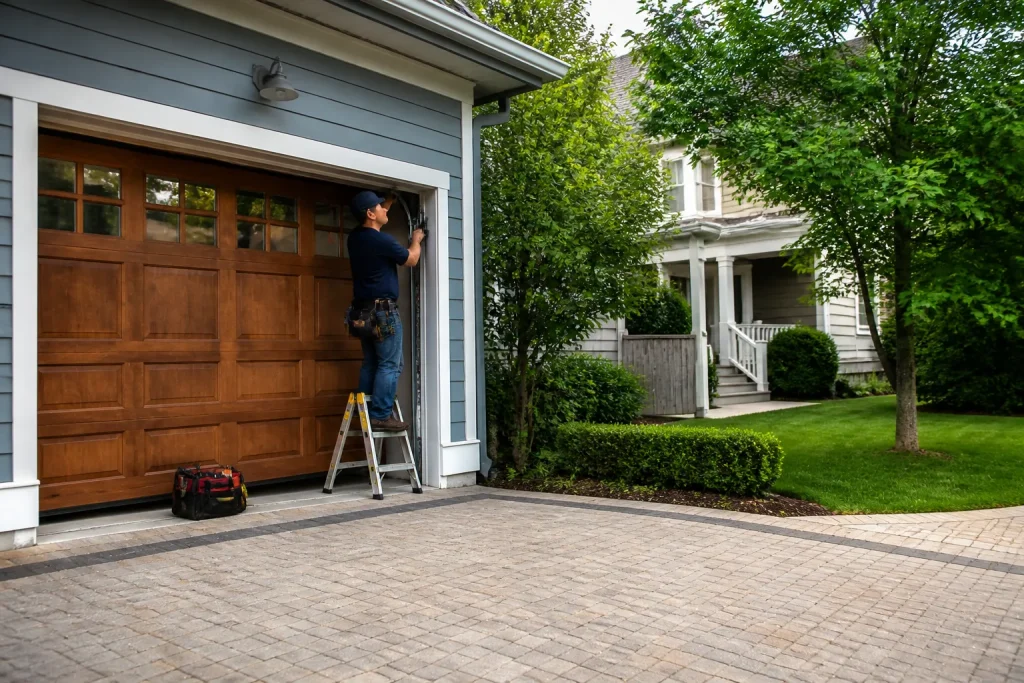
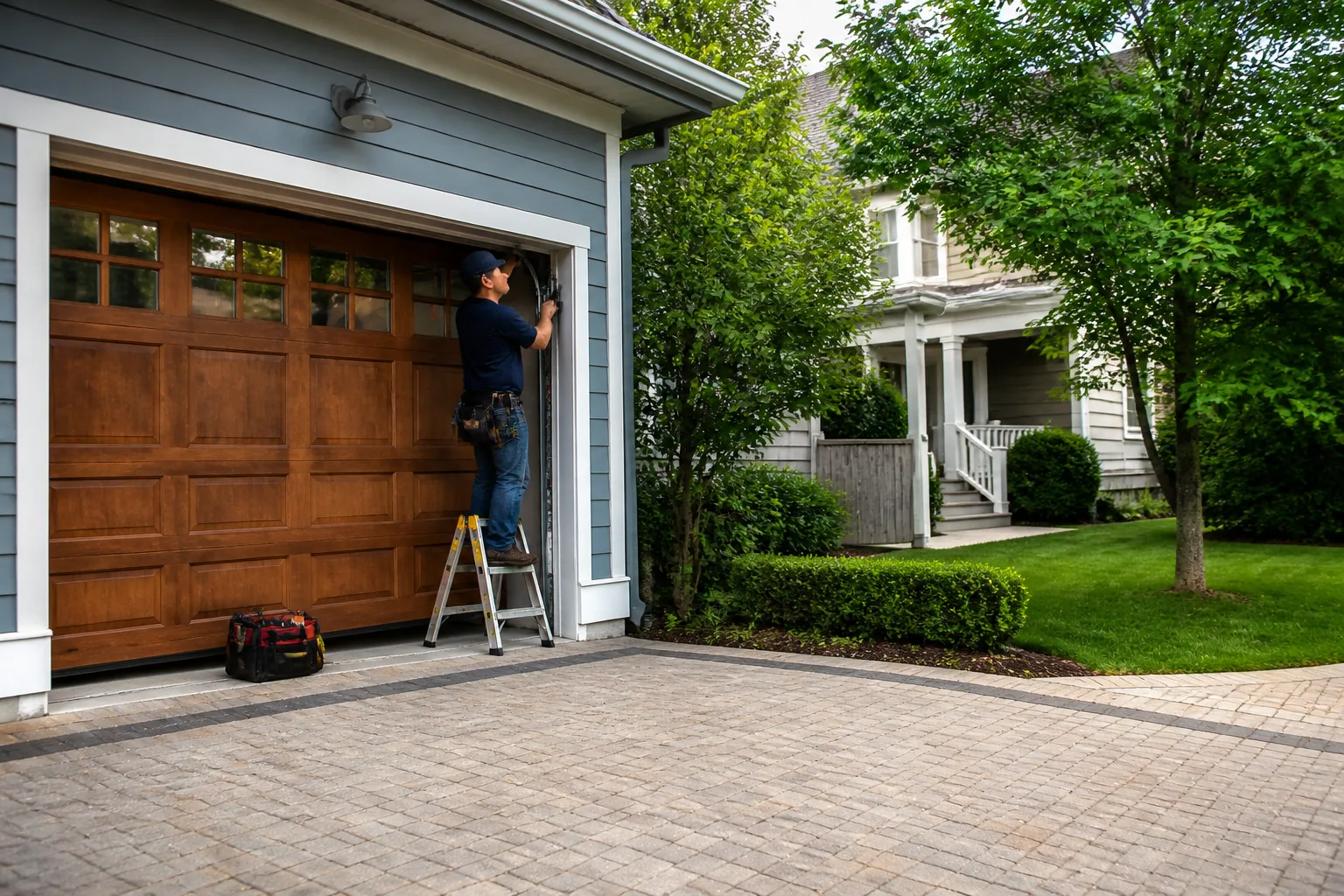
Garage Door Repair: Repair or Replace? How Cambridge Homeowners Decide
Most homeowners make this decision based on the broken part, and that’s the mistake. Replacing a snapped spring on a 22-year-old door with original cables, worn rollers and an opener that’s been straining for years isn’t a repair. It’s a down payment on three more service calls over the next two years. Before you spend anything in Cambridge, evaluate the whole system, not just what failed today.
Why the Broken Part Isn’t the Whole Story
A garage door is a system, and every component wears on the same clock. Springs carry the weight, cables transfer that load, rollers keep the door tracking, and the opener does the lifting the springs were designed to help with. When one part fails at 20-plus years, the others are rarely far behind. A spring that snaps on an old door usually means the cables have stretched, the rollers have flat spots, and the opener has been compensating for a balance problem you didn’t know existed.
We work on the brand you already have – whether it’s a Craftsman opener from the 1990s or a newer LiftMaster – and technicians who see the label first tend to diagnose the system, not just the symptom. That’s the difference between fixing today’s problem and preventing the next three. In Cambridge, where old doors outnumber new ones by a wide margin, this system-level view matters more than in new construction.
How Old Is Each Part, Really? A System-Age Framework
You don’t need a service record to estimate remaining life. Here’s how we walk Cambridge homeowners through it:
- Torsion or extension springs: typically rated for around 10,000 to 20,000 cycles, which works out to roughly 7 to 12 years of normal daily use. Past that, they’re on borrowed time even if they haven’t snapped.
- Cables: usually replaced when they show fraying, kinks or rust. Cables that came with the door 20 years ago should go when the springs do.
- Rollers: steel rollers last longer than nylon, but both develop flat spots and get noisy. If the door rattles on the way up, the rollers are telling you something.
- Opener: most last 10 to 15 years before the motor or logic board gets unreliable. A struggling opener on old springs is a symptom, not the cause.
- Panels and hinges: rusted hinges and a sagging top section point to structural wear that affects balance.
If two or more of those are near end of life, replacement usually wins. If everything else is sound, the repair is the right call and we’ll tell you so.
The Cambridge Housing Stock Factor Nobody Mentions
Cambridge has a lot of triple-deckers and older single-family homes, and that shapes this decision in ways it doesn’t in a subdivision built in 2005. Older garage openings are frequently non-standard – a width or height that isn’t the modern default. A replacement door in that opening often needs custom sizing, which affects both what doors are compatible and what the project costs. Header condition, low clearance above the door, and the way the old track was mounted all come into it.
This isn’t a reason to avoid replacement, but it’s a reason to get a measured assessment rather than a phone quote. Cambridge homeowners who assume a standard door will drop in are the ones surprised by the final number. A technician who measures first and orders second gets it right. If you’re weighing this against a repair, our garage door repair service can tell you whether the existing door is worth keeping.
When Ugly Crosses Into Structural
Dents, faded paint and a scuffed lower panel are cosmetic. You can live with them, and often should. Structural compromise is different, and it shows up as balance problems rather than appearance problems. Here’s how to tell the difference:
- Cosmetic: surface dents, chalking paint, faded panels. The door still tracks straight and lifts evenly.
- Getting structural: a visible sag across the top section, gaps where panels meet, hinges pulling away from the frame, or a door that binds in one spot.
- Structural: bent track, cracked panel at a hinge point, or a door that needs the opener to push it past a sticking point every time.
Cosmetic doesn’t affect balance. Structural does, and a door that isn’t balanced grinds the opener motor and wears the springs faster. In Cambridge’s older housing stock, we see panels that look rough but are perfectly sound, and we see doors that look fine but won’t stay balanced without help. The test is how the door moves, not how it looks.
The Real Cost Comparison: Repair vs. Replace
Homeowners tend to compare a repair invoice to a new-door quote and stop there. That’s only half the math. The comparison that matters accounts for labor you’ve already spent, the failures that are likely coming, and whether the old door is costing you in energy. An older insulated door with failing seals lets heat out in winter and in during summer, and worn weatherstripping does it even when the door is closed.
Ask yourself:
- How much have you spent repairing this door in the last two years?
- Are springs, cables, rollers or opener close to end of life?
- Does the door need help to close evenly, or draft air around the edges?
- Is the door itself structurally sound beyond cosmetic wear?
If the repair is a single component and the rest checks out, repair is the sensible choice. If you’re looking at the third repair on an aging system, replacement usually costs less over the next five years. For a failing opener specifically, garage door opener repair is often the right fix even on an older door, as long as the springs and cables are healthy.
Questions to Ask on the Service Call
How you ask changes what you get. A technician called to fix a broken part will fix the part. A technician asked about the whole system will give you a system-level evaluation. In our experience, these questions prompt a more honest assessment:
- “What’s the condition of the springs, cables and rollers, and how much life do they have left?”
- “Does the door balance properly with the opener disconnected, or is the opener compensating?”
- “What’s the realistic remaining life of this door, and what’s likely to fail next?”
- “If this were your own door, would you repair it or replace it?”
If the answer is a single component and nothing else, that’s what you pay for. If the technician points to the springs as a system-level concern, that’s worth listening to. Spring work is the highest-risk repair in the trade, done wrong it causes injury, and that’s why we keep it a dedicated service. If you suspect a spring problem, garage door spring repair is where to start rather than trying anything yourself. Treat torsion springs, cables and opener wiring as off-limits for DIY; a trained professional handles those.
When to Call a Pro
If the door won’t stay balanced, the spring has snapped, the cables look frayed, or the opener is straining, stop and call. We answer 24/7, and a snapped spring or a door stuck open is a security concern, not just, an inconvenience. Fast dispatch runs 7am to 7pm, Sunday through Friday. Cambridge homeowners who wait on a security risk usually pay for it one way or another.
Related services in Cambridge: Cambridge Garage Door Repair Co handles spring repair, opener repair and full installation from first measurement to final test, so you don’t need a second company for any part of the job.
The Bottom Line
Repair the door that’s sound and replace the system that’s worn out. Aging springs, stretched cables, flat rollers and a struggling generator of an opener close to end of life usually means replacement wins, even though the repair invoice looks smaller today. A single failed part on an otherwise healthy door means repair is the right call, and we’ll tell you so. Our technicians have up to 13 years of experience working on the brand you already have, whether that’s Raynor, Chamberlain, LiftMaster or another make we service. If you’re in Cambridge and need help deciding, Cambridge Garage Door Repair Co offers free estimates and sets the price per job in a written estimate before any work starts. Call (855) 870-5964 to get started.
Frequently Asked Questions
Repair if only one component has failed and the rest of the system is sound. Replace if springs, cables and the opener are all near end of life at once, or if the door is structurally compromised. The decision comes down to system age, not the invoice in front of you. Call (855) 870-5964 for a free estimate.
Costs vary by job, so we quote a written estimate before any work starts rather than guessing over the phone. The written estimate sets the price, and the estimate itself is free. A system-level assessment tells you whether the repair makes sense before you spend anything. Call (855) 870-5964 for an exact quote.
Yes. We check spring cycles, cable condition, roller wear, opener health and door balance, then give you the realistic remaining life of each. If the repair is worth it, we say so. If replacement makes more sense over the next few years, we say that too. It’s the honest answer rather than the easy one.
An old door that won’t close fully, or one stuck open after a failure, is a security risk, not just, a hassle. Springs and cables holding doors open under tension can also fail dangerously if handled by anyone untrained. Stop and call. We answer 24/7 and can dispatch a technician for time-sensitive failures.
Written by the team at Cambridge Garage Door Repair Co.
Need Garage Door Help?
Call Cambridge Garage Door Repair Co - the local pro we connect you with is licensed and insured, here with fast help in Cambridge.
(855) 870-5964